
Across Aotearoa New Zealand, game science examines coastal flood decisions, classroom learning and digital mental-health support. Hours spent playing reveal little about whether people understand more, decide differently or benefit once the game ends.
What game science actually measures
A serious game has a purpose beyond entertainment, such as preparing for a hazard or practising a skill. Game-based learning puts play or game creation into teaching. Gamification applies game-design elements to a non-game task. Game studies investigates play as culture, including representation, identity, communities and rules.
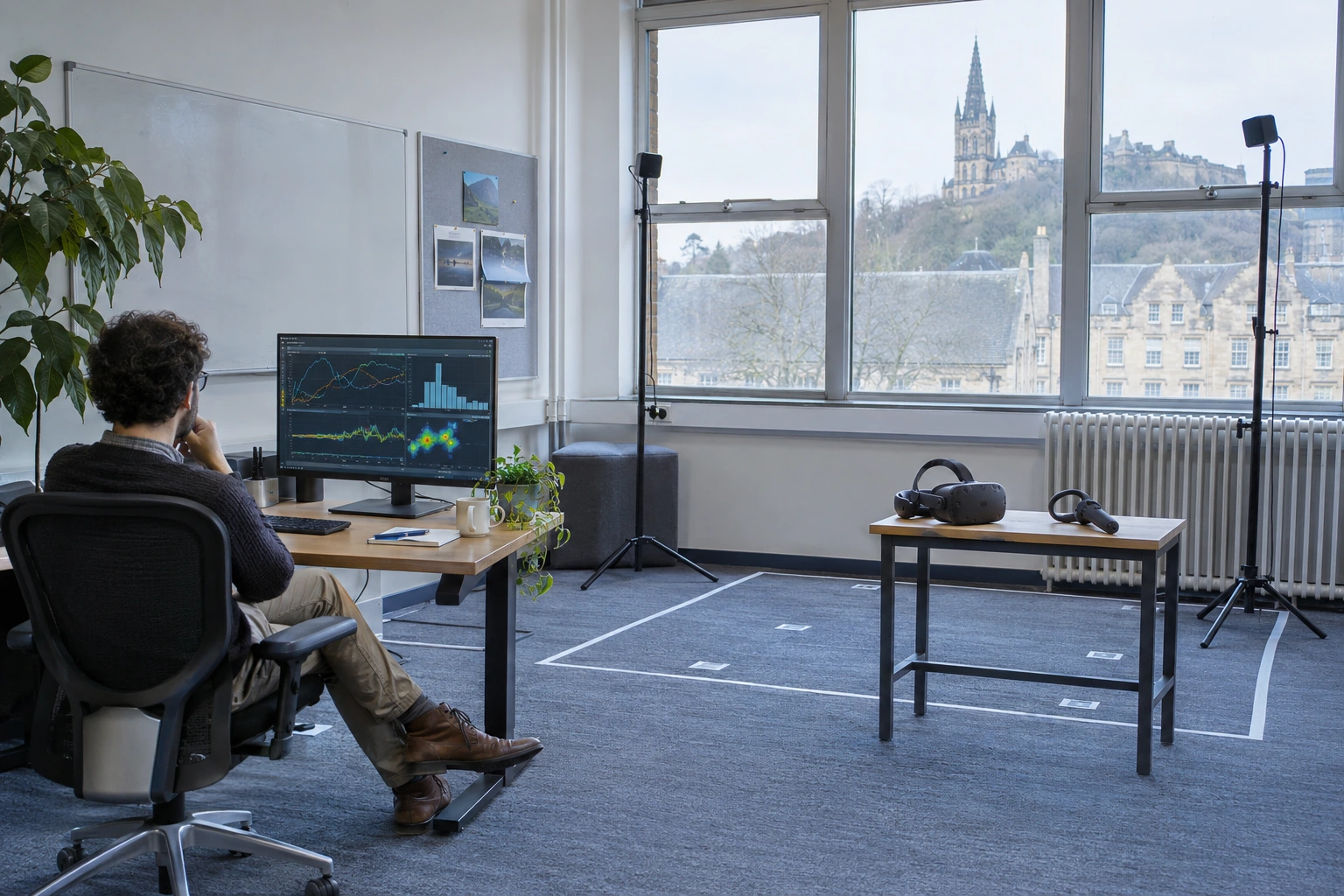
What counts as evidence changes with the task. Flood simulations record choices under uncertainty. Classroom games reveal how students work together; clinical games need validated health measures. Cultural inquiry asks whose experiences the rules privilege. Enjoyment and minutes played cannot replace those outcomes.
Co-design explores whether a game fits its intended users. Usability testing uncovers awkward controls or instructions; observational data capture what people do during play. Claims about cause and effect need an appropriate comparison, often a controlled trial. A promising workshop cannot stand in for that test.
International game science research and case studies
Future Coasts Aotearoa: climate choices with real trade-offs
Future Coasts Aotearoa, developed by NIWA, now part of Earth Sciences New Zealand, places players in a coastal settlement confronting rising seas, groundwater changes, flooding and tight budgets. Property owners, farmers, councils and communities face conflicting priorities. Players work alone or in groups of up to five, choosing between adaptation pathways as climate events unfold.
The programme connects online gameplay with the Future Coasts Aotearoa Challenge board game, the Coastal Adaptation Challenge and a Lower Waikato Simulation involving iwi, hapū and community members. The online game was developed with support from Hum Interactive and GEO AR. Its recorded choices inform an agent-based model of how landowners and other decision-makers might respond to policy settings and environmental pressures.
Accounts from the Future Coasts programme describe players revising strategies after facing delays or unaffordable choices. The model explores retreat timing and the effects of council policies, but its results are scenario-dependent. A decision made by a simulated landowner does not predict how a household will respond during a real emergency.
Township Flood Challenge: the value and limits of gameplay data
The Township Flood Challenge places homes, farms, businesses and a marae in a flood-prone rural settlement. Five community characters face adaptation choices across a simulated 70 years, played in ten-year blocks. One character represents Māori land tenure, including buildings and ūrupa. No participant can know exactly when extreme weather will strike, so a decision that seems affordable today can create exposure later.
Teaching resources developed with Future Curious and the Aotearoa Social Studies Educators' Network connect the game to climate science, wellbeing, values, equity and decision-making. Students can also redesign the town's response as a board game, turning scientific information into an argument about who carries the cost of adaptation.
A 2025 analysis by Wei Yang, Sarah Harrison, Paula Blackett and Andrew Allison examined adaptation choices recorded in the Township Flooding Challenge. Incomplete records and unclear data definitions restricted interpretation. A log of which option someone chose cannot explain that decision without what alternatives they understood, the resources available to them and their reasons for choosing.
Games for Learning: evidence from New Zealand classrooms
The New Zealand Council for Educational Research (NZCER) Games for Learning project examined digital and tabletop games, role-play, game design and gamification in schools. Rachel Bolstad and Sue McDowall's 2019 report drew on fieldwork at 14 schools, interviews with 21 teachers and more than 100 students from Year 3 to Year 13. Teachers connected activities to curriculum goals, sometimes asking students to build or modify games themselves.
At Hutt Central School, four teachers brought games and game design into a Year 5–6 syndicate in 2017. The work took different forms across four classrooms and continued beyond the initial inquiry.
In Wellington, Playing for Peace involved two Year 13 history classes in a peacebuilding role-play over six periods. Students negotiated alliances and competing interests, then discussed the decisions in a debrief. Sue McDowall's work on critical games literacy asks learners to question a game's assumptions, representations and rules, not just how to win.
These classroom accounts do not establish higher assessment scores across New Zealand. That would require curriculum-linked outcomes, a suitable comparison and a later test of what students retained.
SPARX: separating clinical effectiveness from real-world completion
SPARX is a New Zealand-developed, game-based cognitive behavioural therapy (CBT) intervention for adolescents experiencing depressive symptoms. Its seven interactive modules translate therapeutic skills into a fantasy-game environment. A 2012 randomised non-inferiority trial led by Sally Merry and colleagues enrolled 187 young people aged 12–19 across 24 primary healthcare sites. SPARX was not inferior to treatment as usual on the trial's primary measure. In the per-protocol analysis, remission was recorded for 43.7% of SPARX participants and 26.4% of those receiving usual care.
Clinical performance under trial conditions is only one test. A 2025 observational analysis of national implementation reported more than 21,000 adolescent registrations from the initial seven years of public availability. Of the 13,564 who started the programme, only 3.1% completed all seven modules. Earlier technical barriers included slow downloads and device compatibility. Symptom changes among users who remained engaged cannot be treated as proof of the same effect for everyone who registered.
Trial efficacy and sustained use are different outcomes. The New Zealand Ministry of Health describes SPARX as a resource that can sit alongside other care, not a general replacement for therapy, counselling or medication. Referral pathways, clinical risk and support arrangements still matter.
HIT Lab NZ: immersive games for resilience and human-centred design
At the University of Canterbury, HIT Lab NZ investigates how people use interactive technology. Its Applied Immersive Gaming Initiative (AIGI) brings virtual reality (VR), augmented reality (AR), mixed reality and applied games into education, health and industry projects.
The Games for Resilience stream considers immersive experiences for young people with autism or attention deficit hyperactivity disorder (ADHD), alongside virtual field trips and crisis-management scenarios. A separate Superhuman Sports stream investigates AR-enhanced physical activity and game-based motor assessment.
A virtual field trip needs evidence of hazard comprehension and spatial understanding; a motor-assessment game needs agreement with an established measure. Wellbeing applications need appropriate outcomes and safeguards. Immersion or realistic graphics alone cannot establish better learning or health.
5-Minute Volcano: co-designing hazard education with children
5-Minute Volcano is a collaborative physical game about volcanic hazards for New Zealand classrooms. Kieron Wall, Ben Kennedy, Simon Hoermann, Kathryn MacCallum and Heide Lukosch described its co-design and classroom use in a 2026 paper in the International Journal of Game-Based Learning.
Observations of gameplay, teacher interviews and child-friendly questionnaires were analysed for themes including communication, cooperation, curriculum competencies, teacher guidance and local relevance. The Science Learning Hub presents the game as a cooperative activity where characters use different skills to survive volcanic hazards.
Teacher guidance and suitable classroom materials remain part of using the game. Participation and usability observations do not establish lasting knowledge retention or safer behaviour during a real volcanic event.
Auckland City Hospital: a VR earthquake-preparedness prototype
A 2018 Auckland City Hospital case study explored virtual-reality serious games for earthquake evacuation preparation. The work, involving researchers including Ruggiero Lovreglio, Vicente Gonzalez and Robert Amor, identified design questions around building characteristics, earthquake effects, damage, non-player characters and interaction with occupants.
The project produced a framework for a training environment, not evidence that a deployed game prevented injuries or improved real evacuations. Testing skill transfer would require realistic drills and observed evacuation decisions.
Tabletop games and game cultures: outcomes beyond the screen
Massey University's Games Research and Innovation Lab (GRAIL), with Shaun Garea and Ross Hebden, has examined board games, card games, wargames and tabletop role-playing in relation to learning, motivation, wellbeing and social connection. Its nationwide survey explores New Zealand players' habits and experiences; participation in a survey does not establish that a game improves mental health.
At Te Herenga Waka—Victoria University of Wellington, the VUW Game Studies Lab brings humanities and social-science perspectives to games as cultural media. Hamish Cameron's work on ancient-world representations in games such as Assassin's Creed Odyssey, Hades and Dungeons & Dragons illustrates a different type of inquiry: interpretation, historical representation and the relationship between rules, stories and players.
Questions about identity, history and whose knowledge shapes a game call for interviews, discourse analysis and participatory observation. A leaderboard or session-length metric cannot answer them.
Kaupapa Māori gamification and youth co-design
Game mechanics are not culturally neutral. In a 2023 University of Waikato doctoral project, Dannette (Dannie) Jefferies developed and evaluated a gamified health concept through a kaupapa Māori approach. Co-design hui informed a prototype; a subsequent survey and regression analysis examined factors associated with willingness to use it. Perceived ease of use, Māori-centric design and whakataetae (competitive) strategies were identified as predictors of behavioural intention. Intent to use a tool is not the same measure as an observed long-term change in physical activity or health.
A 2026 Auckland University of Technology project by Sarah Bodmer and Cath Conn involved four student co-designers imagining a healthier, more sustainable Auckland. City-building and world-building offered a setting to consider environmental pressures, planetary health and kaitiakitanga. Its small exploratory scale makes it useful for generating design concepts, not for estimating the preferences of all Auckland young people.
Both projects raise questions about who defines the problem, whose knowledge shapes the rules and who controls information collected from participants.
How to judge whether a game-science result is credible
A game can record a response without demonstrating meaningful change. Enjoyment and usability are useful findings, but neither proves that players behave differently outside the game.
| Question | Appropriate evidence | What it cannot establish alone |
|---|---|---|
| Did learners acquire a skill? | Curriculum-linked tasks, comparison groups, delayed recall and assessed application | That enjoyment or short-term recall equals durable learning |
| Did a simulation reveal decision patterns? | Recorded choices, resource constraints, interviews and scenario comparisons | That simulated decisions predict behaviour in a real flood or evacuation |
| Did a health game improve outcomes? | Validated measures, suitable controls, follow-up and safety monitoring | That trial efficacy guarantees national uptake, completion or equal access |
| Is the experience usable and inclusive? | Co-design, accessibility testing, interviews and observed task completion | That a small participant group represents an entire population |
| Does a prototype work outside the lab? | Field deployment, transfer tests, maintenance records and longer-term outcomes | That a successful demonstration proves real-world impact |
A credible comparison asks what would have happened without the game or with a less costly teaching or training method. Measures include knowledge retention, decision quality, task errors, equitable participation, clinical symptom scores, module completion and adverse events. Downloads and playtime can describe reach, not the intended outcome.
Research standards that matter across settings
Good game-science studies state who participated, what was measured, how comparison groups were chosen and what the evidence cannot show. Findings from overseas may not transfer to different player populations, platforms or cultural settings.
Questions behind the evidence
Does high engagement mean a game works?
No. Engagement measures participation, not learning or health outcomes. SPARX's trial findings and subsequent completion figures need to be understood separately.
Can gameplay predict decisions outside a simulation?
Only within the simulation's incentives and constraints. Family obligations, land tenure, local policies and real costs can change a decision. Interviews and field data are needed before applying gameplay patterns to public policy.
Is virtual reality necessary for serious-game research?
No. VR suits spatial rehearsal; tabletop role-play can expose negotiation; browser games record repeated choices; classroom games work without specialist hardware.
What distinguishes a documented case study from a promotional success story?
A documented case identifies participants, setting, method, observed results and limitations. A prototype cannot be presented as evidence from a controlled trial.